
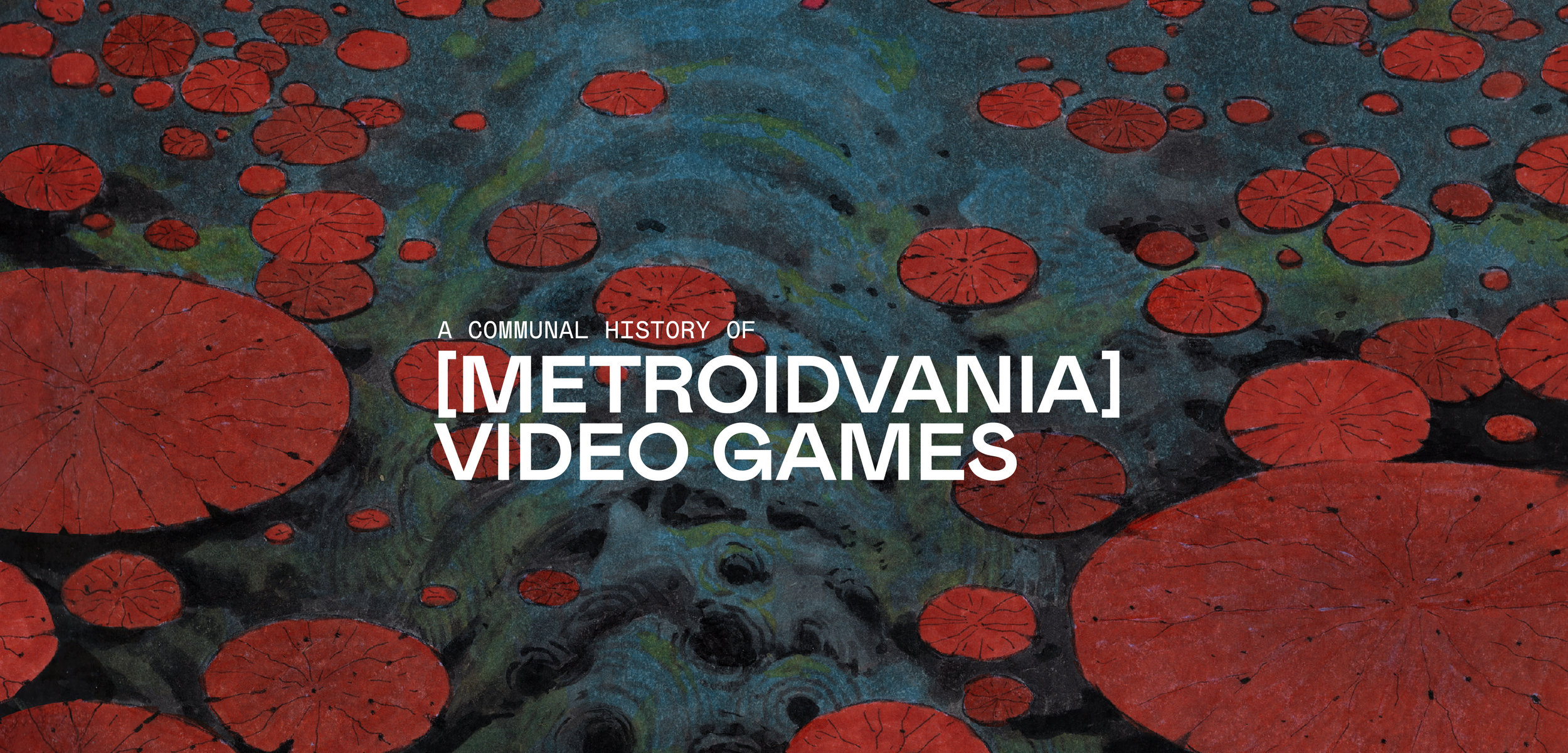
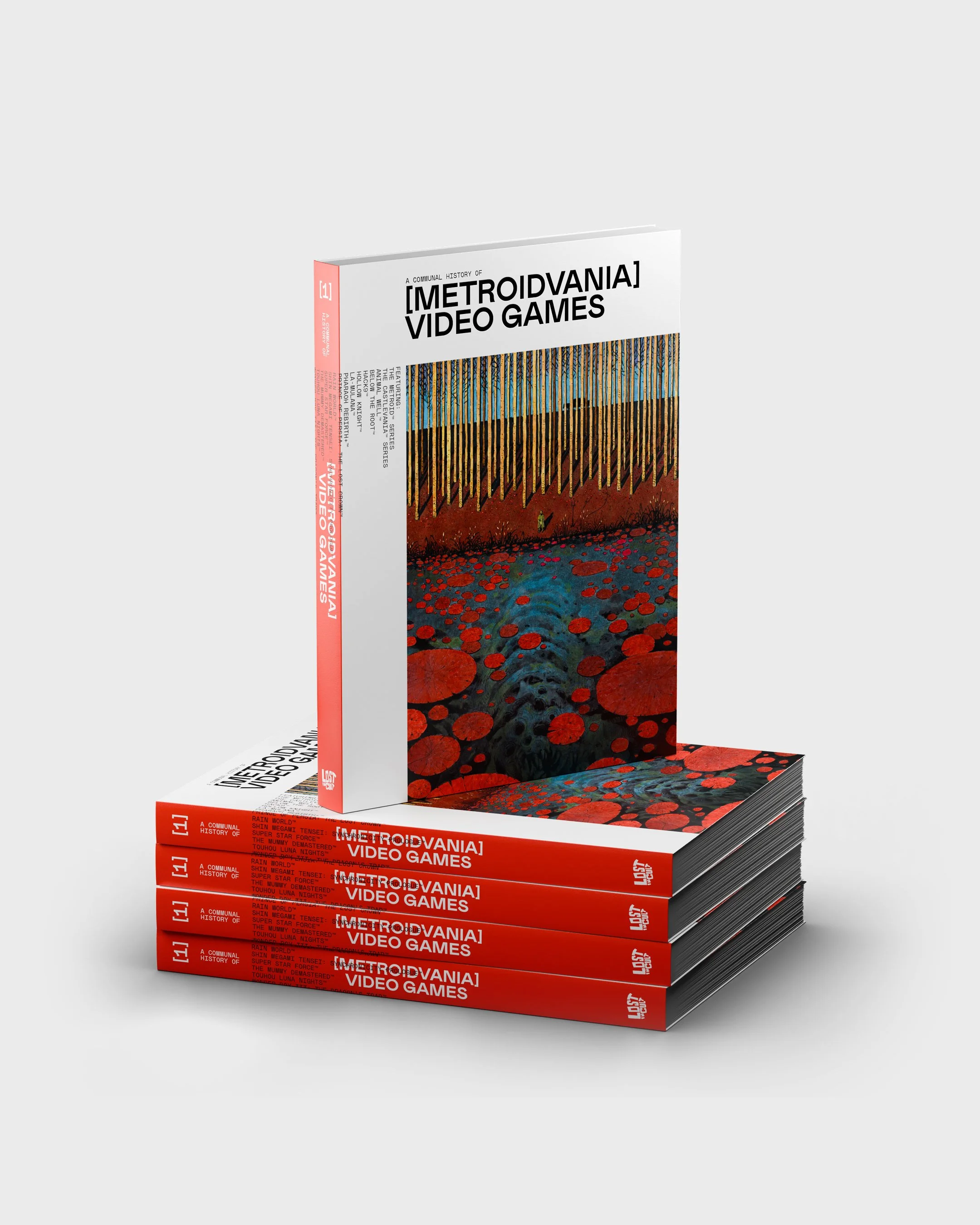
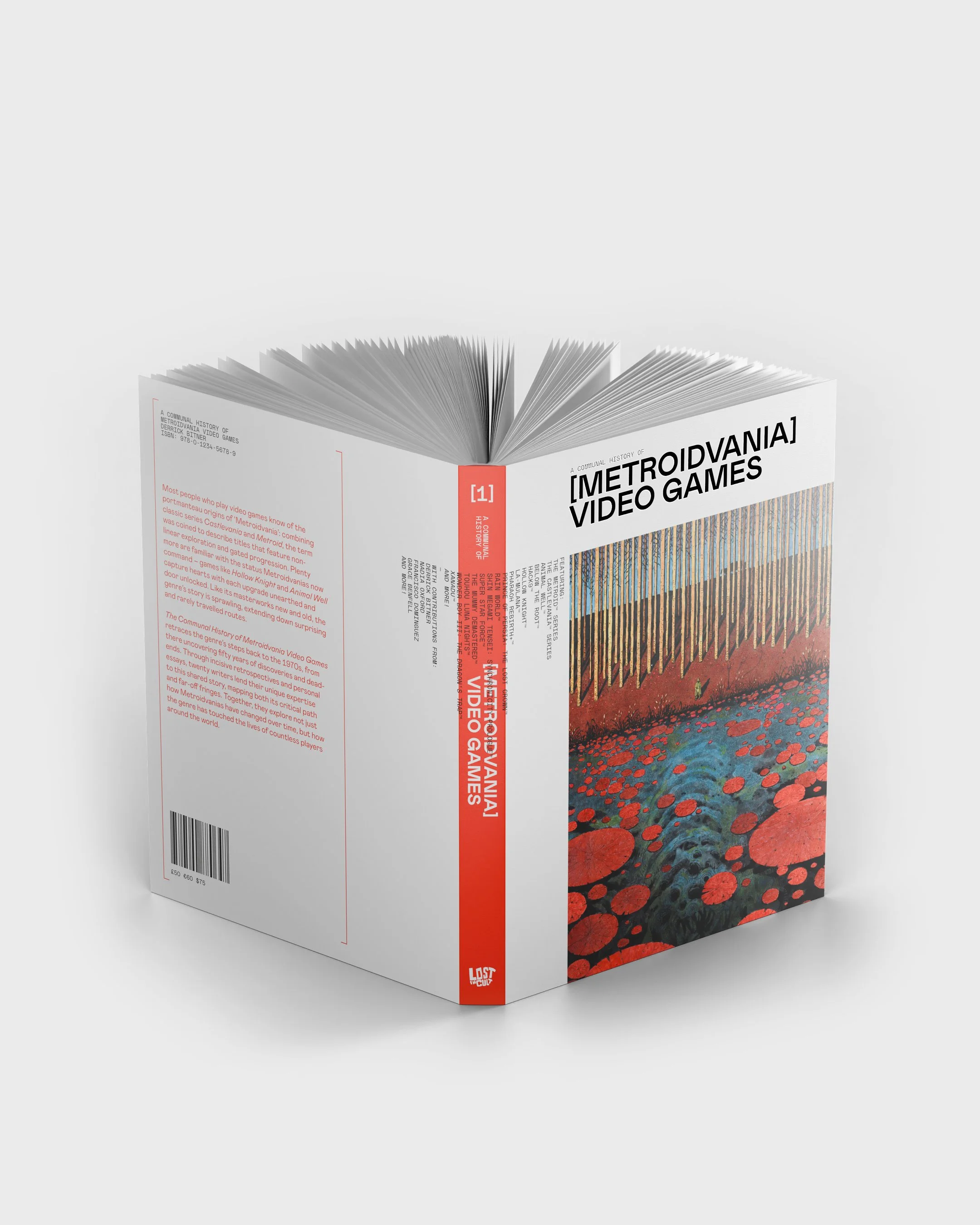

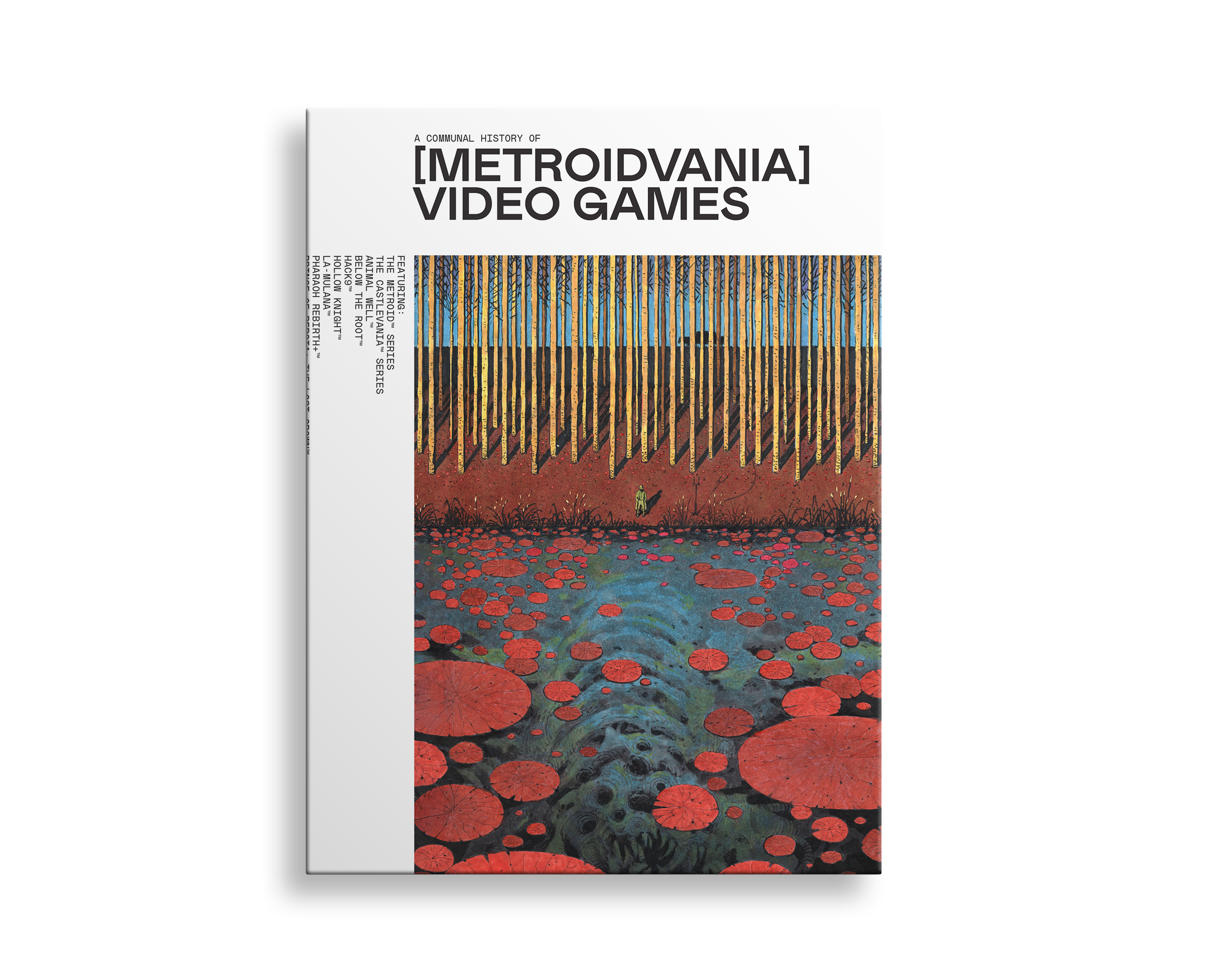
Most people who play video games know of the portmanteau origins of ‘Metroidvania’: combining classic series Castlevania and Metroid, the term was coined to describe titles that feature non-linear exploration and gated progression. Plenty more are familiar with the status Metroidvanias now command – games like Hollow Knight and Animal Well capture hearts with each upgrade unearthed and door unlocked. Like its masterworks new and old, the genre’s story is sprawling, extending down surprising and rarely travelled routes.
A Communal History of Metroidvania Video Games retraces the genre’s steps back to the 1970s, from there uncovering fifty years of discoveries and dead-ends. Through incisive retrospectives and personal essays, twenty writers lend their unique expertise to this shared story, mapping both its critical path and far-off fringes. Together, they explore not just how Metroidvanias have changed over time, but how the genre has touched the lives of countless players around the world.
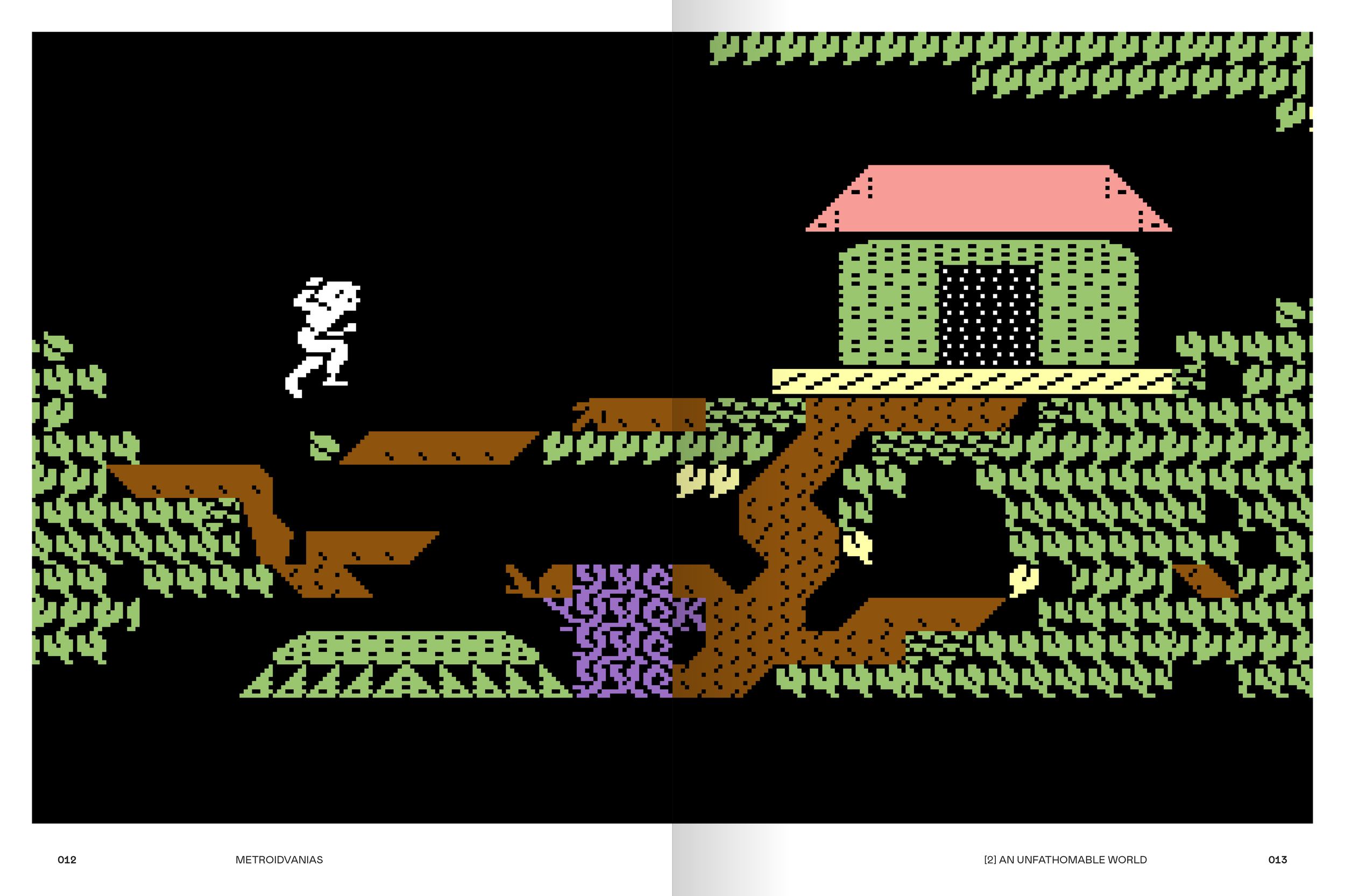
Celebrate titans of the genre while making space for offbeat icons. Journey back to the pre-Metroid era with essential historical curiosities like Below the Root and Xanadu. Imagine a different sort of Metroidvania with atypical adventures like La-Mulana and Tomba. Meet the overlooked greats of the Japanese indie scene, like Hack9 and Pharaoh Rebirth+. And, of course, chart the growth of the Metroid and Castlevania series from their foundational entries through to their modern classics.
Specifications
Lead Author: Derrick Bitner
Illustrator: Luan Tie (Dirty Iron)
15+ contributors Softcover book
250+ pages
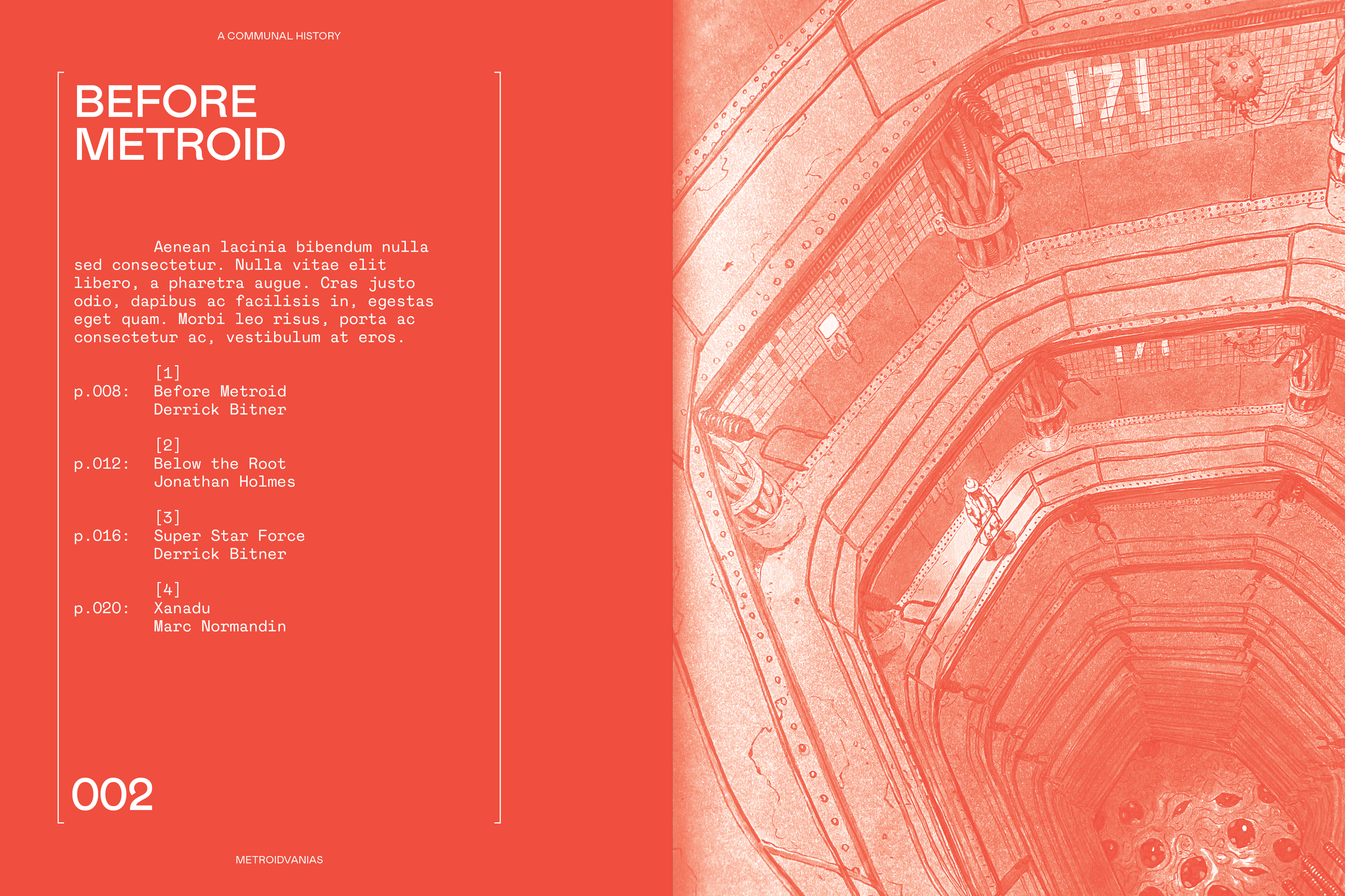
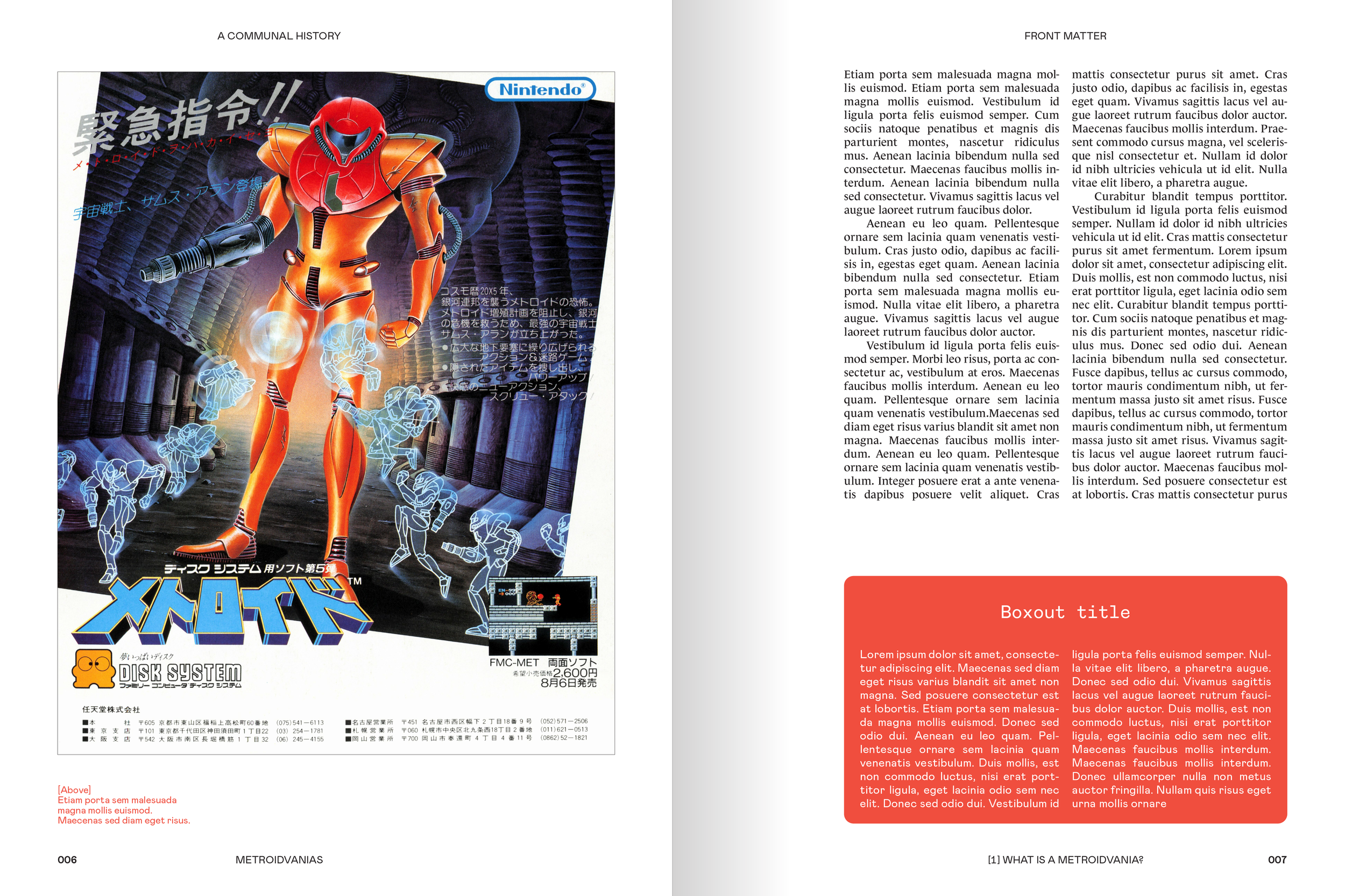
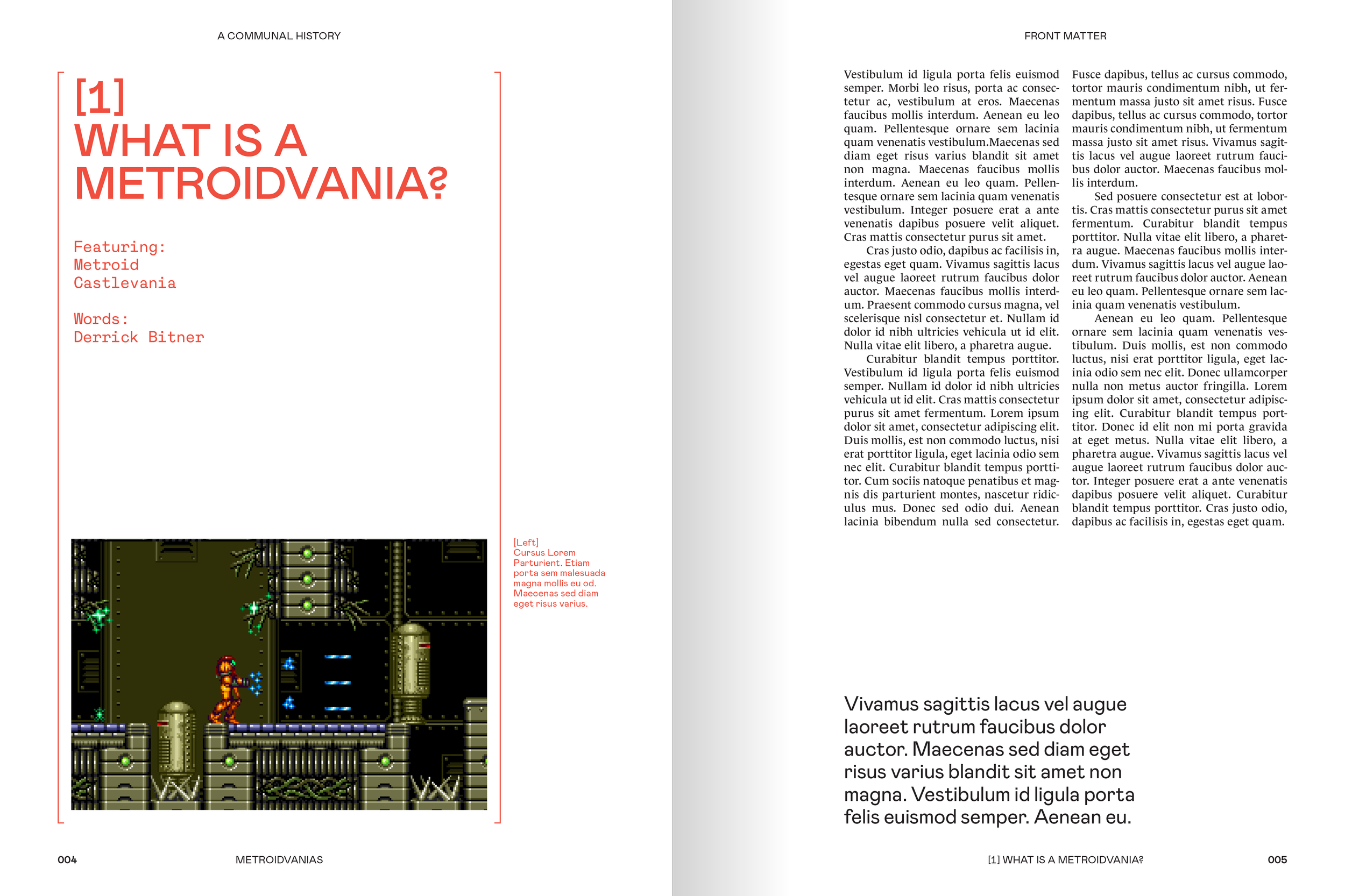
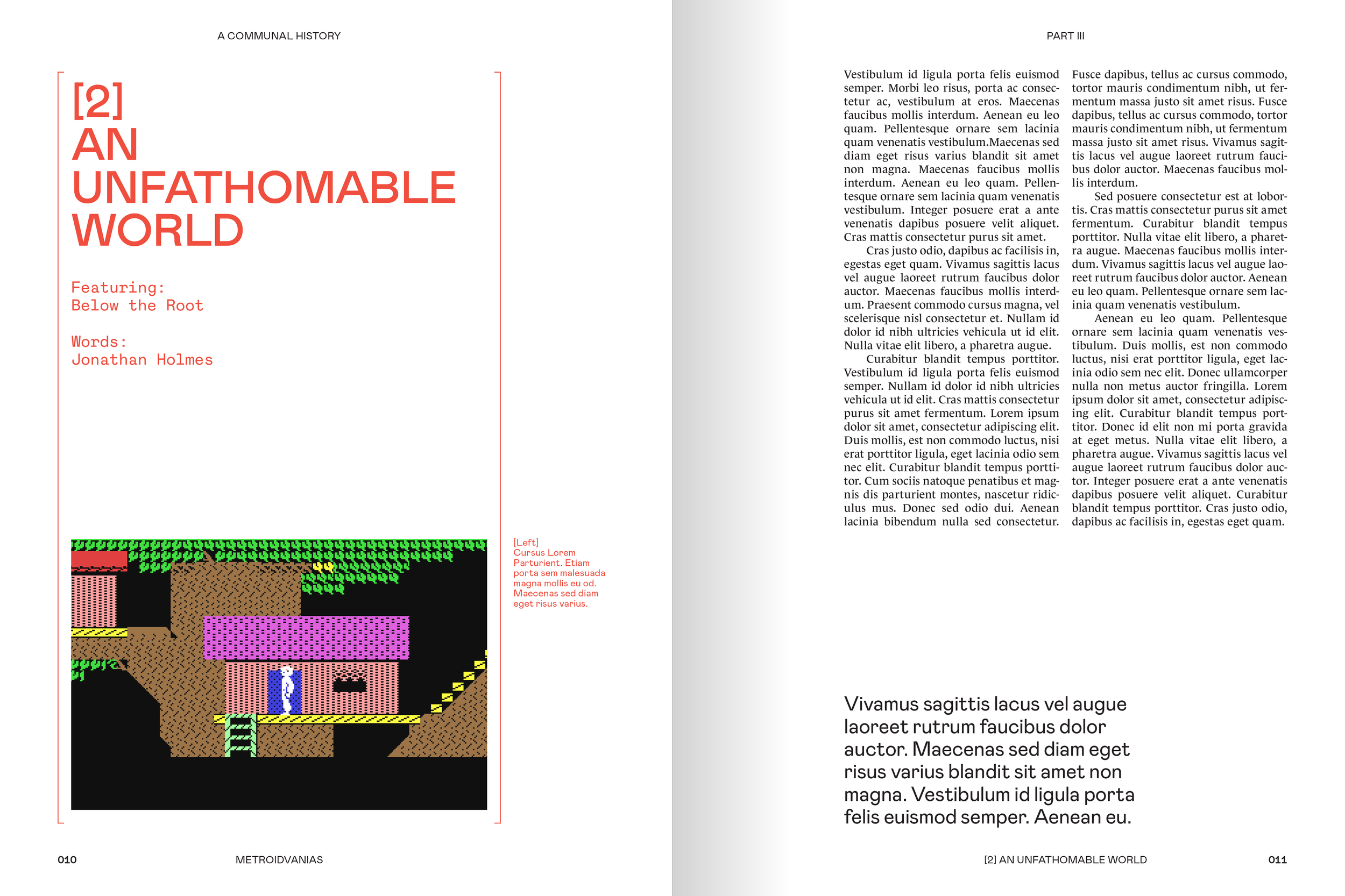
Featured Contributors
The Metroidvania story belongs to its players, and A Communal History of Metroidvania Video Games brings together twenty writers to affirm that fact. One feature recounts how Animal Well acted as a guiding star for two new parents reorienting their lives after the birth of their child. Another puts Castlevania in conversation with Caravaggio. And, at the centre of the book, lead author Derrick Bitner embarks on an odyssey of research and analysis, exploring how the Metroidvania genre ebbed and flowed over more than fifty years of imaginative, landmark games.


Introducing: A Communal History of Video Games
A Communal History of Video Games is a new series from Lost In Cult that celebrates the past, present, and future of beloved game genres. Each instalment in A Communal History of Video Games pairs research-driven retrospectives with personal essays to tell the story of a specific genre and the way it impacted players, across time and around the world.
Placing a dual emphasis on the classics and overlooked gems, experts and newcomers alike will discover new favourites while reading – endeared to them by incisive storytelling and sharp design principles. Evolving the vision of past Lost In Cult books like A Handheld History and The Console Chronicles, The Communal History of Video Games fills its pages with archival imagery and original illustrations, masterfully arranged to guide the reader through every chapter.
-
Through extensive research, we at Lost In Cult create historical, critical, and educational resource books dedicated to Video games, Movies, and pop culture.
We often work directly with a multitude of developers and Publishers in the relevant communities. But in the event we do not:
All projects fall under Fair Use: Copyright Disclaimer Under Section 107 of the Copyright Act in 1976; Allowance is made for "Fair Use" which is a doctrine in the United States and Sections 30 & 64 of the Copy Designs Patents Act 1988, United Kingdom, copyright law that allows limited use of copyrighted material without requiring permission from the rights holders, such as for purposes including commentary, news reporting, criticism, teaching, scholarship, and research. We also acknowledge “The Code of Best Practices in Fair Use in the Visual Arts “( CAA 2015) with particular reference to factor 4; Analytical writing and in consideration of its limitations. Lost In Cult also asserts that all artwork is intended to be informative and illustrative and is sufficiently transformative from its intended use.
It provides for the legal, non-licensed citation or incorporation of copyrighted material in another author's work such as our fan-made books.
Fair Use is a use permitted by copyright statute that might otherwise be infringing.
All rights and credit for the intellectual property and any copyrighted content used in a limited scope in this book go directly to the applicable company in question. No copyright infringement is intended and all fan-made original content (Written, Inspired, or Artwork) within the book was created by Lost In Cult LTD, the creators of these unlicensed books, which is not endorsed by or in association with the applicable company in question.